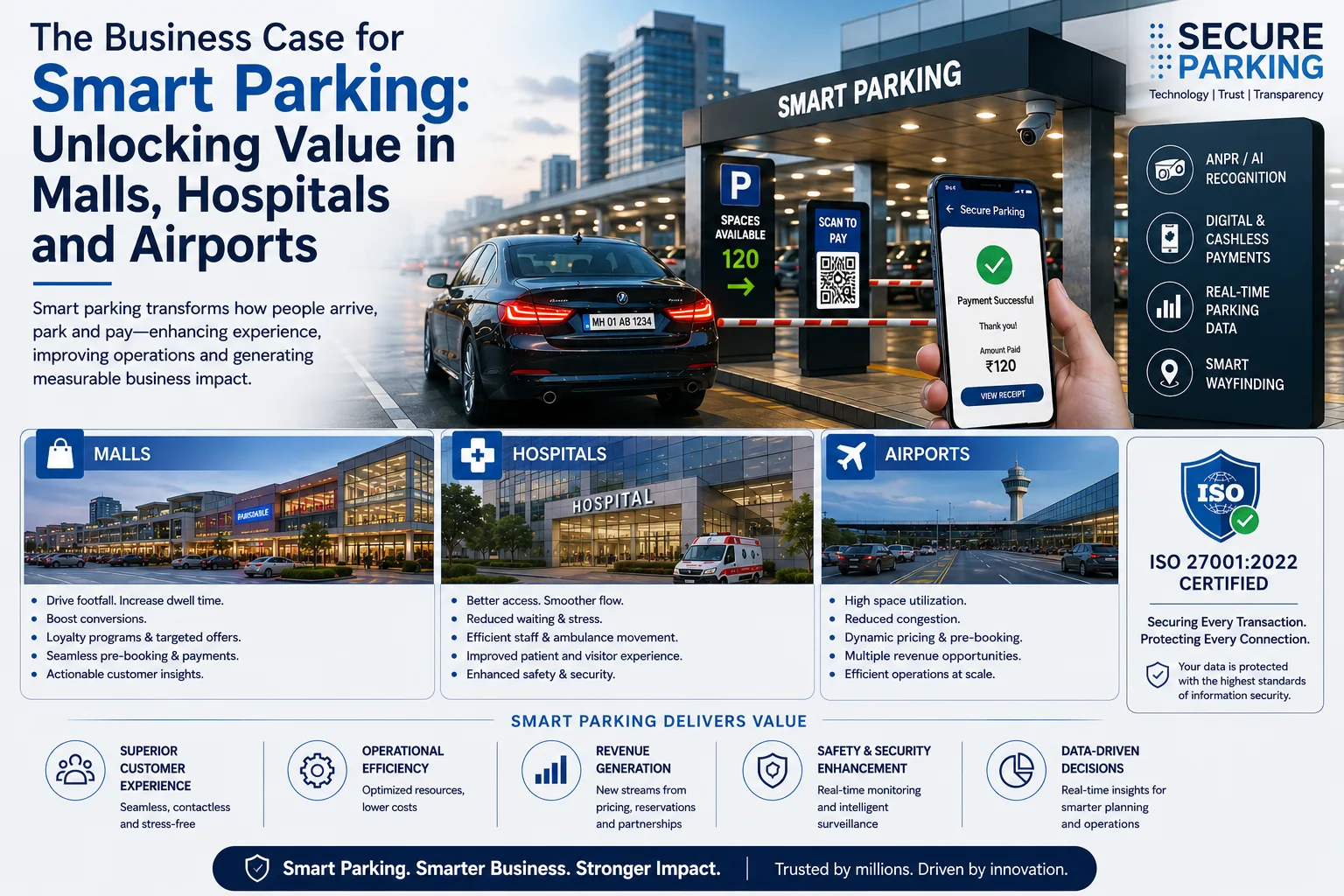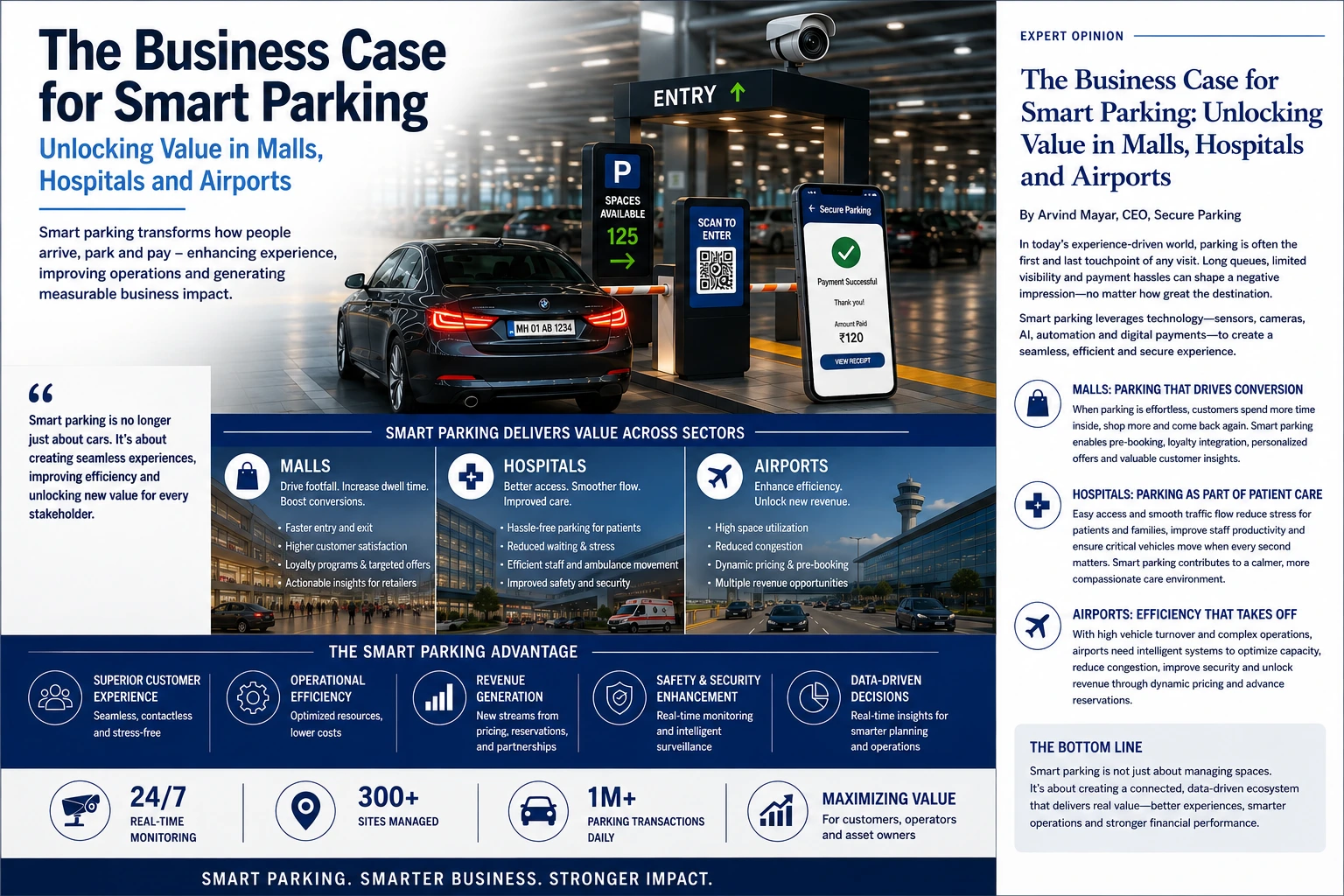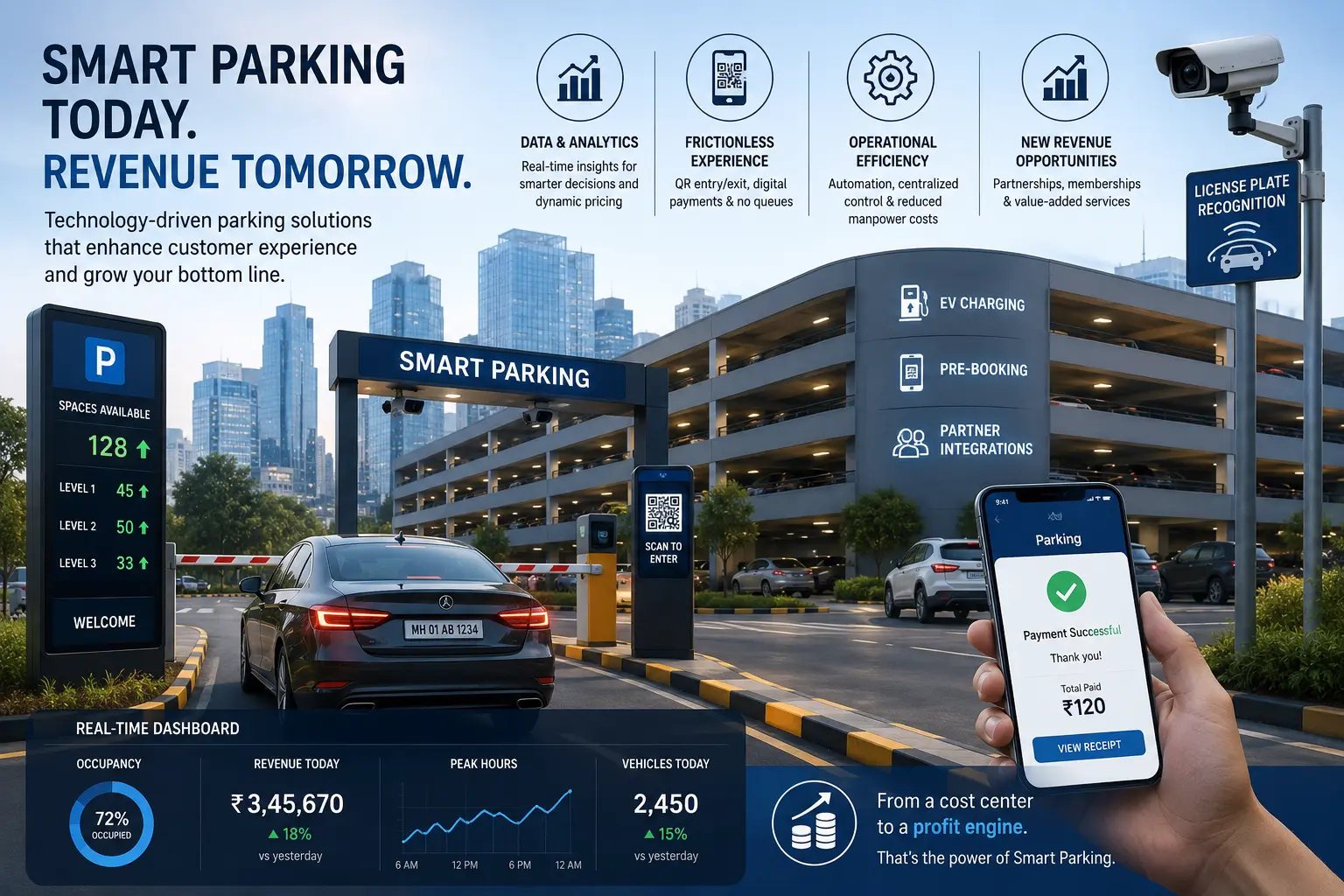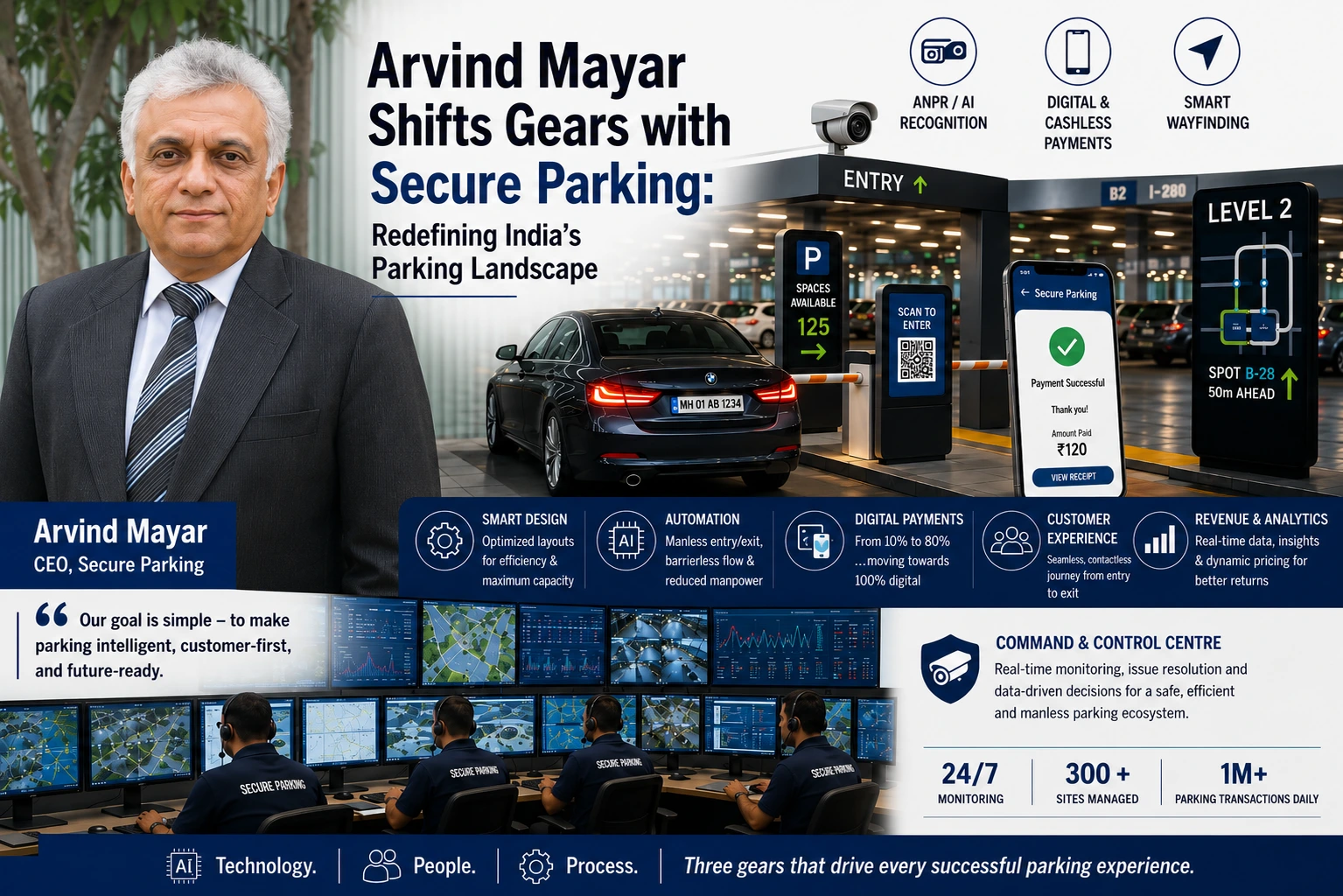
Arvind Mayar, CEO of Secure Parking, talks about transforming India’s parking industry. From tech adoption to smart design, Mayar shares key insights. Here’s what he had to say about the use of automation in the parking industry and much more in a Team’s virtual interaction with Tejaswini Paranjape of Architecture Update Magazine.
Q. In big malls like Phoenix or Lulu Mall, what ensures smooth parking for visitors?
Response: Three factors keep operations smooth: 1. Design: Estimating peak traffic and planning entries, exits, ramps, and circulation right from the Greenfield stage. 2. Technology: ANPR/AI systems, automation, digital payments, and wayfinding tools. 3. Manpower: Customer-facing staff who guide visitors, resolve issues, and maintain order.
Q. When you work with developers, what makes them accept your design recommendations?
Response: Good design helps optimise space and enables more parking within the same area. This reduces CapEx and operational costs while improving customer experience. For example, circular ramps designed with the right parameters avoid scraping, eliminate multi-point turns, and ensure smooth flow. Developers value these practical improvements.
Q. What are the three most important KPIs for any new parking project?
Response: The three key KPIs are design, technology (ANPR/AI, digital payments, reconciliation, data analytics), and manpower. Together, these ensure efficient and reliable car park operations.
Q. What major shifts have you observed in India’s parking industry, and how are you adapting?
Response: India has adopted parking technology very quickly—faster than many developed Southeast Asian countries. The biggest shift is increased automation in entry, exit, and wayfinding, which will greatly reduce manpower requirements. Digital payments have grown from 10% to 80% in two decades, and the industry is moving towards almost 100% digital. To support this, command and control centres are essential for resolving customer issues in a largely manless environment.
Q. What challenges have you faced while expanding in India?
Response: Twenty years ago, the industry was nascent, and many believed professional parking management wasn’t necessary. Manual ticketing was the norm. Introducing trained, uniformed staff improved service but initially met resistance due to added cost. Cash handling was another challenge—collecting ₹2–3 crore daily and transporting it safely carried risks. Government car parks often select operators based on price rather than service. However, awareness is improving, and expansion is now faster than ever.